What practical life means
Maria Montessori noticed children prefer real work over pretend when given respect and scaled tools. Practical life is not a craft project — it is pouring water, snapping beans, wiping spills, and arranging shoes.
These activities train concentration, hand strength, and sequence — the same skills needed for writing and math.
Setting a low shelf
One tray at a time: two pitchers, one cup, a sponge for spills. Child pours left to right on a small mat. When bored, rotate — buttoning frame from an old shirt, sorting pulses by colour, transferring beans with a spoon.
Everything child-sized: small jug, small brush, small dustpan. Success breeds willingness.
- Pouring dry rice then wet water (supervised)
- Sorting buttons or lentils by colour
- Wiping table after meals
- Folding napkins — start with one fold
Connecting to worksheets
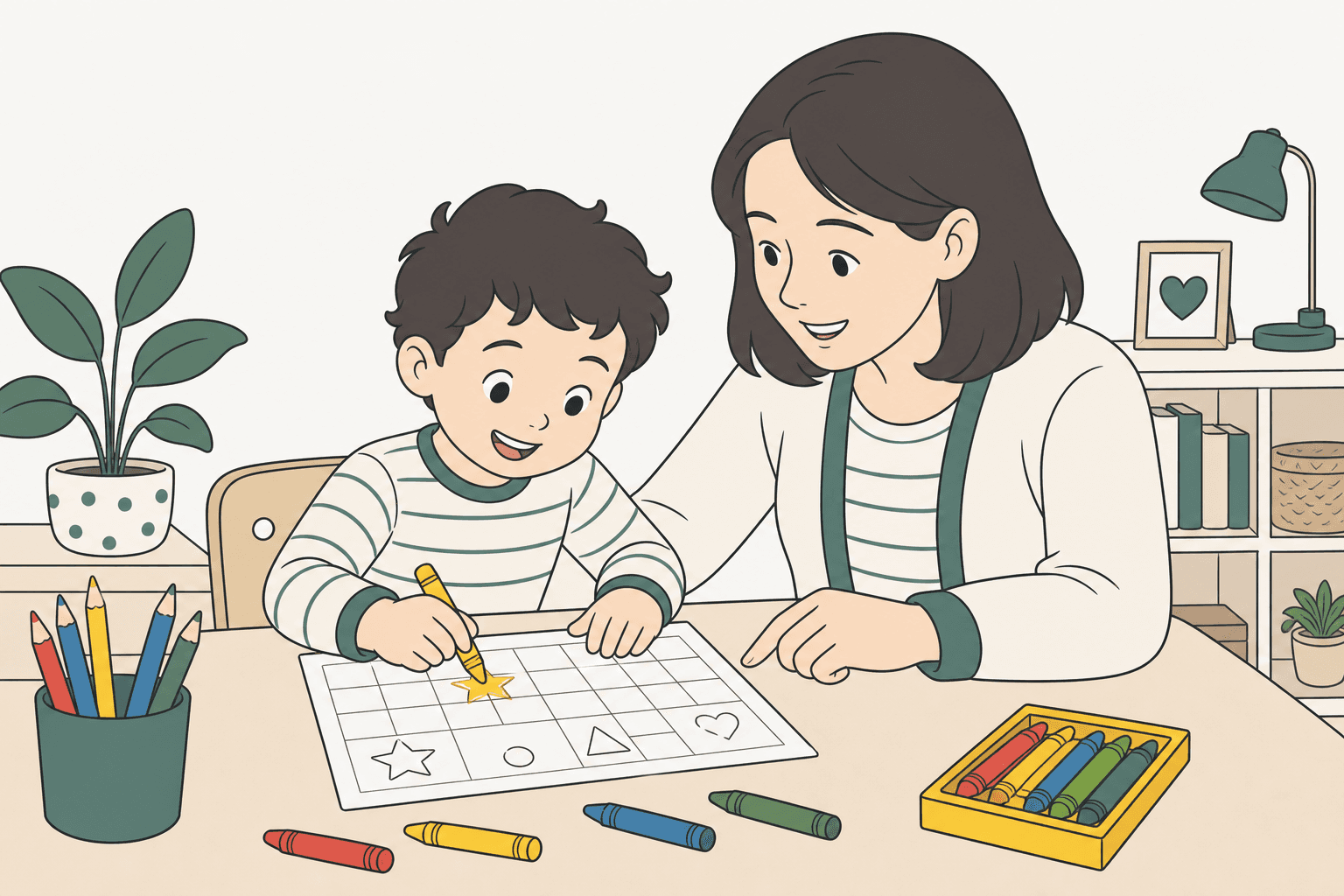
After ten minutes of practical life, offer one tracing or counting sheet. Hands are warm, shoulders are down — pencil grip improves noticeably.
Never use worksheets as punishment for spilled water. Clean together calmly; that is the lesson.
Common mistakes
Too many trays at once overwhelms. Adult perfectionism (‘let me do it right’) steals learning. Praise effort: ‘You wiped until the table felt dry.’
Include boys and girls equally in kitchen and laundry tasks — life skills have no gender.
Weekly rhythm
Monday pouring, Tuesday sorting, Wednesday food prep (wash grapes), Thursday plant watering, Friday cleaning a shelf. Predictability lowers resistance.