Screens are a symptom
Children request tablets when bored, lonely, tired, or when adults model constant phone checking. Removing the device without filling the need fails within days.
Start with connection: five minutes of eye-level play when they arrive home. Then offer a prepared activity — not a lecture about addiction.
The screen-free basket
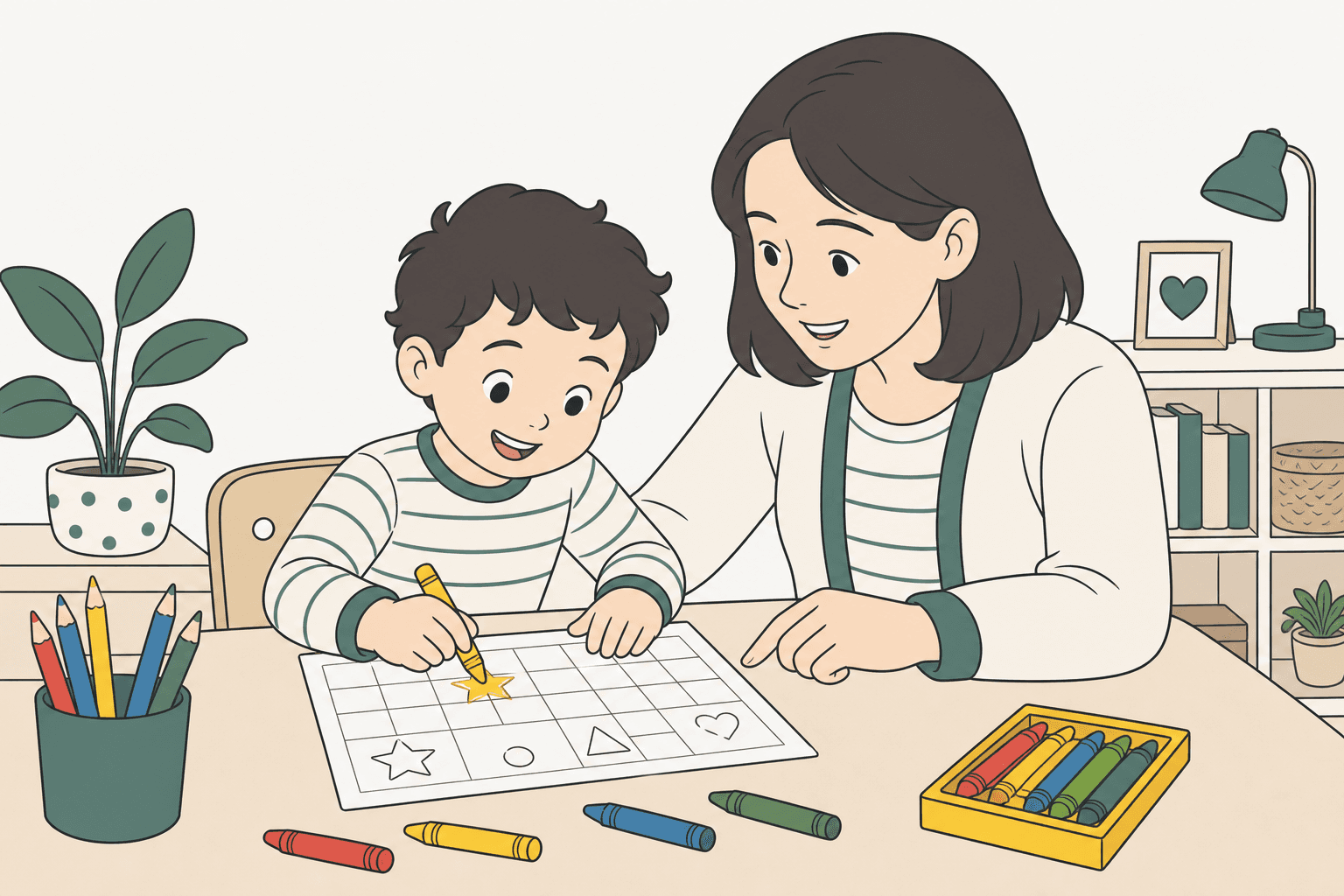
One basket, always ready: crayons, glue stick, safety scissors, stickers, lacing cards, small puzzles, tracing sheets, and story picture cards.
Rotate top layer weekly. Visibility beats storage in a closed cupboard children forget exists.
- Morning: one worksheet while you cook
- After school: snack then basket — not TV
- Weekend: longer project (fort, baking)
- Adults put phones in a bowl for one hour
Age-based limits that feel fair
Under three: avoid solo passive video except rare travel. Co-watch if used.
Ages 4–6: predictable windows — ‘two episodes after lunch Saturday’ on a timer children see.
Ages 7+: co-create rules; write them on paper they decorate. Consistency matters more than zero screens forever.
Full-day rhythm without screens
Wake, wash, breakfast, free play, outdoor time, lunch, quiet time (books or audio stories, not video), creative play, one worksheet, dinner, bath, bedtime story.
Blocks can shift; order should feel familiar. Visual charts with drawings help pre-readers.
When you need twenty minutes
Audio stories, sticker books, or worksheets beside you while you work — still engagement, not algorithmic feeds. Sit together for the first two minutes; independence follows.