Tantrums are not manipulation
A toddler’s prefrontal cortex is under construction. Big emotion floods faster than words can form. They are communicating overwhelm, not plotting against you.
Public tantrums feel shameful for parents — remember strangers have forgotten by tomorrow; your child remembers how you steadied them.
During the peak
Few words: ‘You are upset. I am here. We are safe.’ Lower your body to their eye level if safe. Block hitting without squeezing arms painfully.
Do not reason, bribe with sweets, or threaten. Logic returns after cortisol drops — usually ten to twenty minutes, sometimes faster.
- Breathe slowly — they co-regulate from you
- Remove sharp objects, stay nearby
- No filming; protect dignity
After calm returns
Name feeling: ‘You wanted the blue cup. You felt furious.’ Offer small choice: water in blue cup now or hug first.
Repair without over-apologising for boundaries you needed: ‘Shops closed — we go tomorrow.’
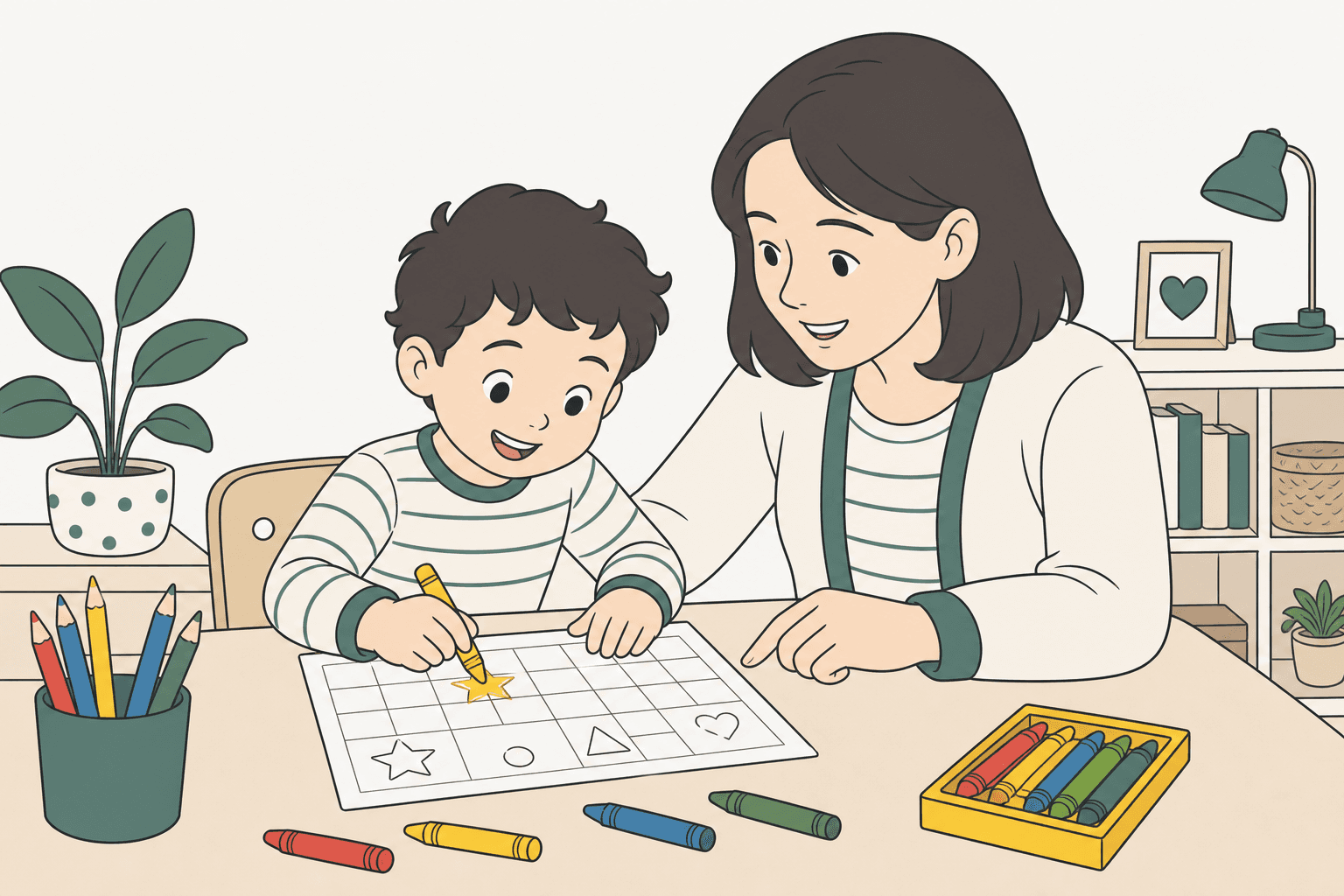
Quiet colouring or matching worksheets can reset hands — not as punishment, as transition.
Prevention patterns
Track triggers: hunger, overtiredness, transitions without warning, overstimulation. Fix the pattern, not only the child.
Warn before leaving: ‘Three more slides down, then shoes.’ Visual timers help.
When to seek help
If tantrums are constant, injure others, or last extreme durations with regression in speech, consult your paediatrician. Most peaks ease with age and steadier routines.